What Doctors Are Saying
Doctors who have received specialized training in the Arthrex Minimally Invasive (MIS) Bunionectomy procedure share how it has benefited their patients and improved their approach to bunion surgery.
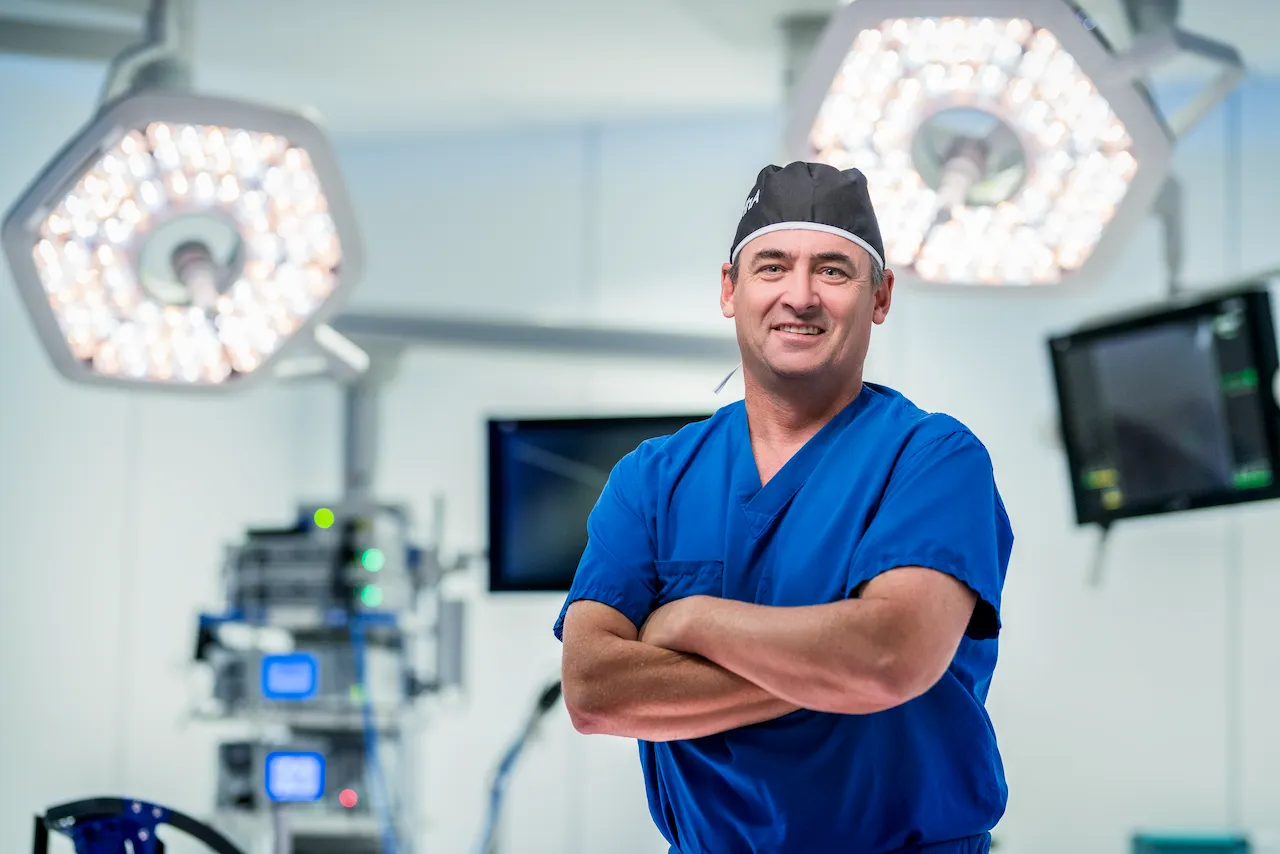

“With over 130 different bunion procedures described in the literature, it is apparent that, until recently, there was no one type of bunion surgery that satisfied all patients and was satisfactory to all surgeons. Since I began performing MIS surgery, over 95% of my bunion surgery has been performed via MIS techniques with overall excellent results. This has resulted in a much more predictable and durable outcome.”
“I believe this is the first inning in MIS. The future will be MIS for most things in foot and ankle and it will be important for foot and ankle surgeons to learn these techniques to better treat their patients. I remain intrigued by MIS and am teaching myself, fellows, and residents techniques in MIS for foot and ankle procedures. MIS has the potential to greatly reduce postoperative complications.”
“The Arthrex Bunionectomy has completely revolutionized my practice, with decreased operating room time,1,2 minimal recovery for patients,1,2 and improved cosmetic incisions.1,3 Patients have never been happier and, to be completely transparent, I have never been happier. I am able to do more cases on surgery days and see more patients in the office because their recovery is so quick. I will never go back to open procedures for bunion surgery.”
“Taking a minimally invasive (MIS) approach to bunion correction has been the most impactful change I have ever made to my practice. Postoperatively, there is significantly less swelling,4 pain,1,2 stiffness,5 and incision problems6 compared to an open approach. This has increased patient satisfaction, accelerated recovery, and has grown my bunion practice considerably as a result.”
“Minimal recovery while being able to bear weight immediately after surgery,1,2 with little to no scarring.1,3 When I discuss this with patients they almost cannot believe it. At times I have been asked, 'Are you sure that is all?' Because there hasn’t been a surgery like this for bunions that addresses their deformity completely and allows them to have small incisions, all while walking directly after the surgery.”
“Open approaches to bunion correction have a bad reputation among patients when it comes to postoperative pain, swelling, and stiffness. Most patients wanting to discuss bunion correction have heard horror stories regarding open approaches. When explaining the MIS approach and the associated benefits of minimally invasive bunion correction, patients are relieved to hear this is even a possibility. The MIS approach to bunion correction has had a considerable impact on postoperative pain,1,2 swelling,4 stiffness,5 and recovery time.1,2 Patients are grateful that the option exists for an MIS approach.”
“Bunion surgery is always approached by patients with a great deal of trepidation. The traditional view has been that such surgery involves a long and incredibly painful recovery. MIS bunion surgery has dramatically changed this, with much less pain1,2 and a much shorter recovery period.1,2 With such a terrific result, I am much more likely to recommend bunion surgery in patients who have a painful deformity that has failed conservative treatment with complete optimism of an excellent result.”
“Minimal pain,1,2 corrected deformity, and even being able to offer bilateral surgery. Patients tell me this is a 'unicorn surgery' and ask how it is possible. I had a patient who had bilateral bunions. She only wanted to do one at a time because she was fearful for the recovery. During the second week postoperative appointment for the suture removal, the patient said 'I just can’t believe how easy this was. Can I please schedule my other side now? Like right now?' The patient also related that she told her dad about this surgery and her dad told her that it was just not possible to have something like this with a small percutaneous incision and immediate weight-bearing1,2 and tried to talk her out of it. After the surgery, she said that she called her dad and told him how incredible it was and sent him photos. The dad then stated, 'I need to see this doctor because there is just no way that it can be this easy.' Her dad then scheduled surgery shortly after his consultation.”
“Patients experience significantly less pain,1,2 swelling,4 stiffness,5 and recovery time1,2 compared to an open approach. My most grateful patients are patients who previously had an open approach on the opposite foot. They have experienced the prolonged recovery associated with an open approach and are pleasantly surprised by the dramatic difference in postoperative recovery following MIS correction.”
“Since we are not making large incisions with big dissections, swelling4 and stiffness5 are significantly less, making recovery much quicker.1,2 Patients love it! Compared to the large incisions necessary to correct a bunion with other procedures, patients are attracted to the better cosmesis of MIS bunion surgery.”
“This surgery addresses the deformity fully and completely. The rotation of the bunion is addressed, the position of the toe is addressed, and the discomfort and pain of the bunion is addressed, all without having to sacrifice a joint. When it comes to bunions, there are so many factors that affect the pathology and personality of the bunion. Small incisions,1,3 minimal swelling,4 immediate weight-bearing.1,2 Before MIS, I did not like bunion surgery because patients just were not happy despite the deformity being corrected. They did not like the scar, they did not like the postoperative healing. It was frustrating as a surgeon because a very common issue did not have an answer. Then MIS came along and it has been a game changer.”
“MIS bunion correction has solved many of the problems associated with open approaches. I don't worry about postoperative pain1,2 or stiffness,5 I can allow patients to bear weight early,1,2 and I have found the postoperative recovery to be much more predictable and tolerable. Patients are incredibly grateful for this improvement in technique, which of course is rewarding for me as a surgeon.”
“MIS surgery addresses all aspects of the bunion deformity in all planes, resulting in a truly 3-dimensional correction. I find its mechanics incredibly interesting. The surgery is efficient and has predictable and durable outcomes,1,2 faster recovery for patients,1,2 better cosmetic1,3 and functional1,2 results, and greater patient satisfaction.1,2”
“Patients will often comment that they have heard horror stories about open bunion correction. I love this type of skepticism as it allows a perfect segue into discussing MIS bunion correction and all of the benefits of an MIS approach. This discussion often eases patients' fears of bunion surgery and makes it a much more approachable procedure.”
“Most patients are worried about postoperative pain and a prolonged recovery. I have found that MIS surgery has significantly improved both.1,2 Patients are worried about postoperative scarring. With its very small incisions, MIS surgery results in much smaller scars than traditional open surgery.1,3”
“My patients cite recurrent deformity, pain after surgery, long recovery times, and/or a friend who had a poor outcome and warned against bunion surgery. Interestingly, not many are that concerned with the size of incisions, and just want a good clinical correction.”
“Most patients have heard horror stories regarding bunion surgery, including about recovery and prolonged non-weightbearing, the scar, and even worse—like that the bunion comes back. When they hear about the MIS bunion procedure, most times the patient cannot believe that something like this has evolved in order to help their pain and discomfort. I have had patients relate that this bunion surgery is amazing and that they want to schedule as soon as possible when we discuss it in their consultation visit, because they did not think this was possible.”